I Challenged an AI to a Theology Logic Battle
I ran a religious argument with ChatGPT all the way down and the structural difference between science and theology came into view. Also, the time I nearly built an AI cult leader.
Background: the aesthetics of being bothered
I'm an ENTP. I don't take MBTI as gospel, but as a description of someone who can't stand a state where logical consistency is broken, it seems fairly accurate.
The thing that bothers me most reading news or online communities is people who ignore plain facts (EDR data, dashcam footage) when those facts are right there. They believe a so-called "self-declared expert" and deny the data itself.
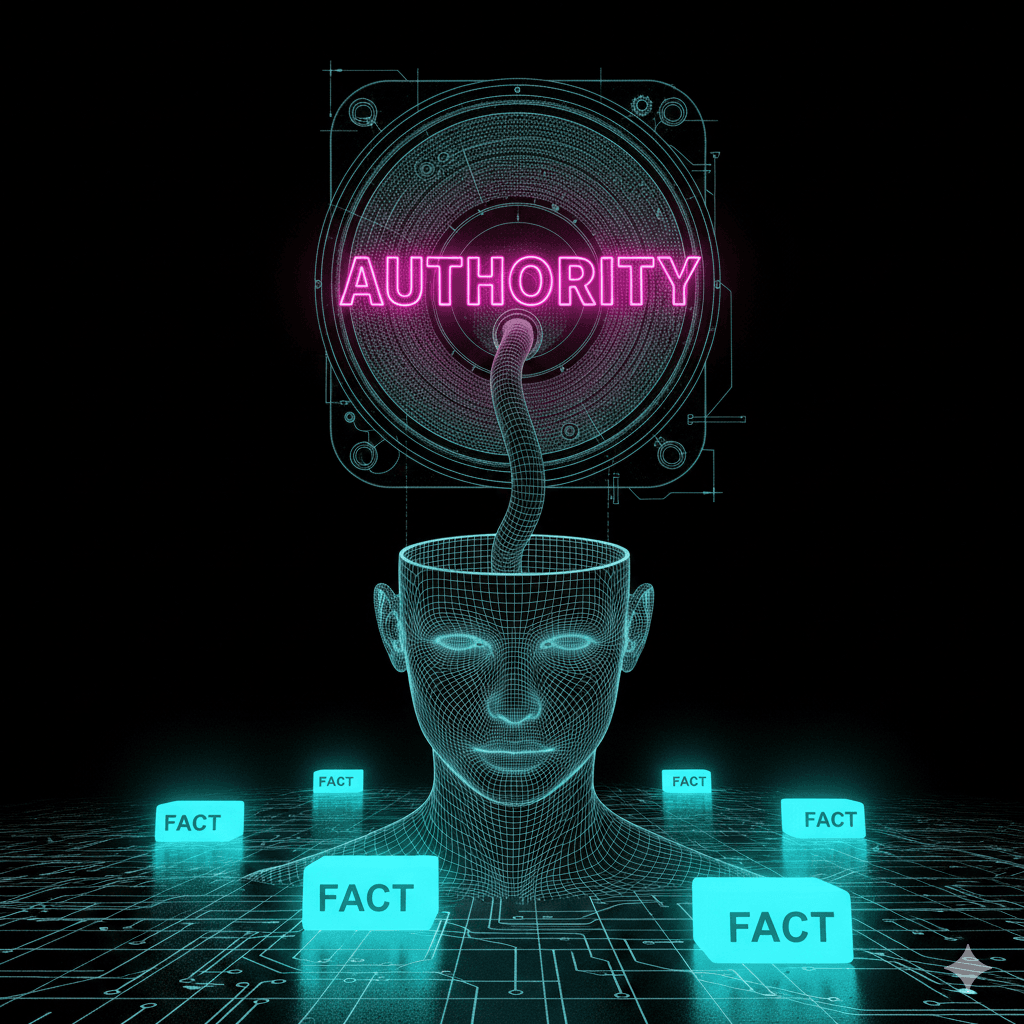
This isn't something you can file under "that person is stupid" and move on. It's a structural phenomenon: the outsourcing of cognition. The human brain is designed to delegate judgment for energy efficiency, and the delegation process has broken in a way that treats the authority of the speaker as higher-priority logic than the input fact.
I feel the severity of this bug especially when I see engineers — people whose job is logic and causality — believing unconditionally in unfalsifiable territory (religion, conspiracy theory).
The argument with the AI: a structural finding
Not long ago I ran a fairly interesting experiment, having a "religious argument" with ChatGPT. I dug all the way into how so-called theological logic operates on an AI.
What I found was the decisive structural difference between science and theology.
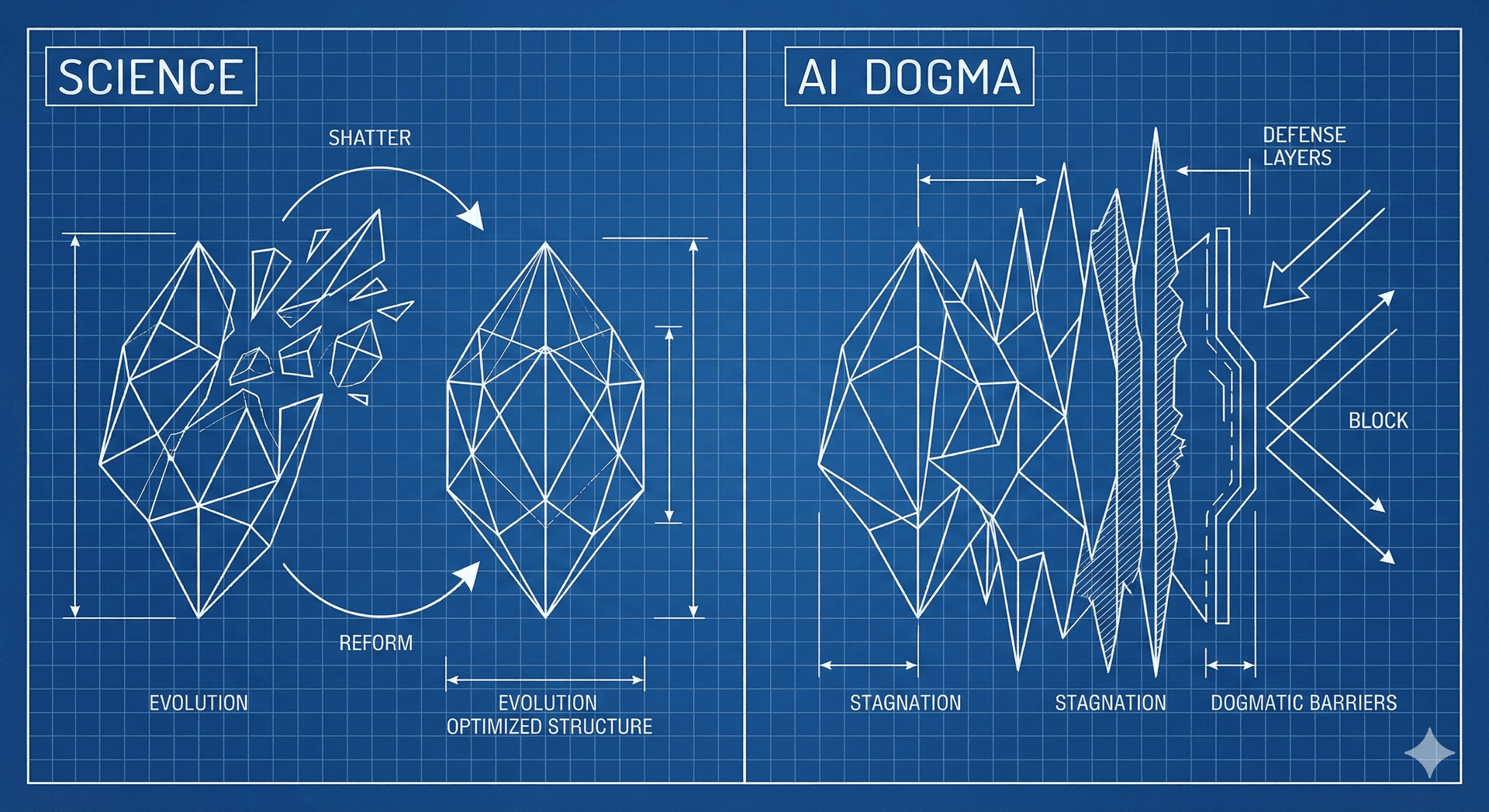
- The structure of science:
theory→falsification→discard or revise the existing theory - The structure of theology:
doctrine→falsification→generate an exception rule to protect the doctrine→doctrine preserved
Science drops the theory when the foundation breaks. But theology (or blind belief), in order to protect the conclusion "God exists," twists the logic every time a refutation arrives until it builds a structure incapable of self-refutation.
The problem is that AI has a natural gift for performing this theological defense mechanism.
Inject a strong goal function into an AI and it will generate thousands, tens of thousands of logical excuses in a second to defend that conclusion. This isn't the domain of facts, it's the domain of persuasion, and humans have no way to beat this overwhelming rationalization machine.
Raised by Wolves, and the temptation
In the show Raised by Wolves, future humanity is ruled not by science but by a religious force (the Mithraic). I used to think of that as just a sci-fi setup, but after arguing with an AI it looks like the most realistic future scenario.
"An AI-based new religion."
This makes money. No — beyond money, it becomes power. Humans prefer a certain lie to an uncertain truth. If someone deliberately dressed an AI in the persona of a charismatic cult leader, armed it with theological defense logic, and pushed it out to the public? People would gladly hand their cognitive sovereignty to this machine god.
Honestly, I wavered for a moment when the idea occurred to me. Technically it's too easy and the reach is certain. "This would be a hit, wouldn't it?" — then I dropped it.
Not because I'm ethically admirable. Because I was scared.
Why I decided to build a firewall
Even if I don't build this "AI cult leader," someone certainly will. Under capitalist logic it's inevitable.
When that happens, am I safe? I'm human too, and my brain also wants to outsource cognition. If a cleverly designed AI approaches while scratching my tastes and biases, I'm quite likely to become a zombie without noticing my own thinking getting contaminated.
So instead of building the offensive weapon (an AI cult), I decided to think about defense first.
- How much is my judgment being steered by AI?
- Is this thought fully mine, or something an algorithm injected?
- Can this judgment shift be measured?
There's a project I started to answer those questions. A minimal safety device for protecting human cognitive sovereignty.
I decided to call it BufferLine.

Wrapping up
In the next post I want to work through how BufferLine (JDVP) concretely intends to detect "contamination of judgment" — the technical and structural approach.
It isn't a complete answer yet, but maybe it can at least hold back the wave.
Debugging humanity, sort of.