Debugging the Collapsed Classroom (Part 2: The Pressure Cooker Nobody Escapes)
No matter how hard content like 참교육 indicts the abnormality, the classroom doesn't change. Working through college-admissions lock-in, populism disguised as equality, and how in a society whose consensus has broken, individuals end up either exiting or free-riding.
Debugging the Collapsed Classroom series
(2 parts)- 1Debugging the Collapsed Classroom (Part 1: The Catharsis of Barbarism)
- 2Debugging the Collapsed Classroom (Part 2: The Pressure Cooker Nobody Escapes)
Part 1 argued that people cheering for the drama 《참교육》 (Teacher's Revenge) reads as a signal that "the system has stopped." It left a question hanging. Why doesn't anything change when everyone knows it's broken? And why can't politics fix it?
What snagged
Seo-i Elementary (the 2023 teacher's death), Sookmyung Girls' High (the grade-tampering scandal), comedian Lee Su-ji's recent satire — there were clear, painful milestones and the system fundamentally didn't change. Satire indicts the abnormality and people still push their kids into a collapsing classroom.
That didn't add up for me. Alternative schools, homeschooling, edtech... there appear to be plenty of detours, so why does nobody leave? The usual filing is "public school is still the safe option" and move on.
I wanted to redefine one word here. People staying in public education looks less like a choice and more like being forced into a purchase. Explain it as choice and you get to escape into "well, they picked it themselves"; look at it as a forced purchase and the blocked exits become visible. Even the things that look like detours are bound inside the same admissions frame, so they aren't real exits.
How the detours got blocked (lock-in)
The root of this forced purchase is, in the end, college admissions.
Back when the regular track (the CSAT) dominated, if you didn't like your school you could take the equivalency exam and just score well on the CSAT. That's what made homeschooling viable. Bypassing the system was relatively free, because you only had to produce one quantitative metric: a score.
That flipped completely as the rolling-admissions/holistic-review (qualitative) share grew. Now the core data a university looks at is the school record, and the only place that can generate and vouch for that record is the school.
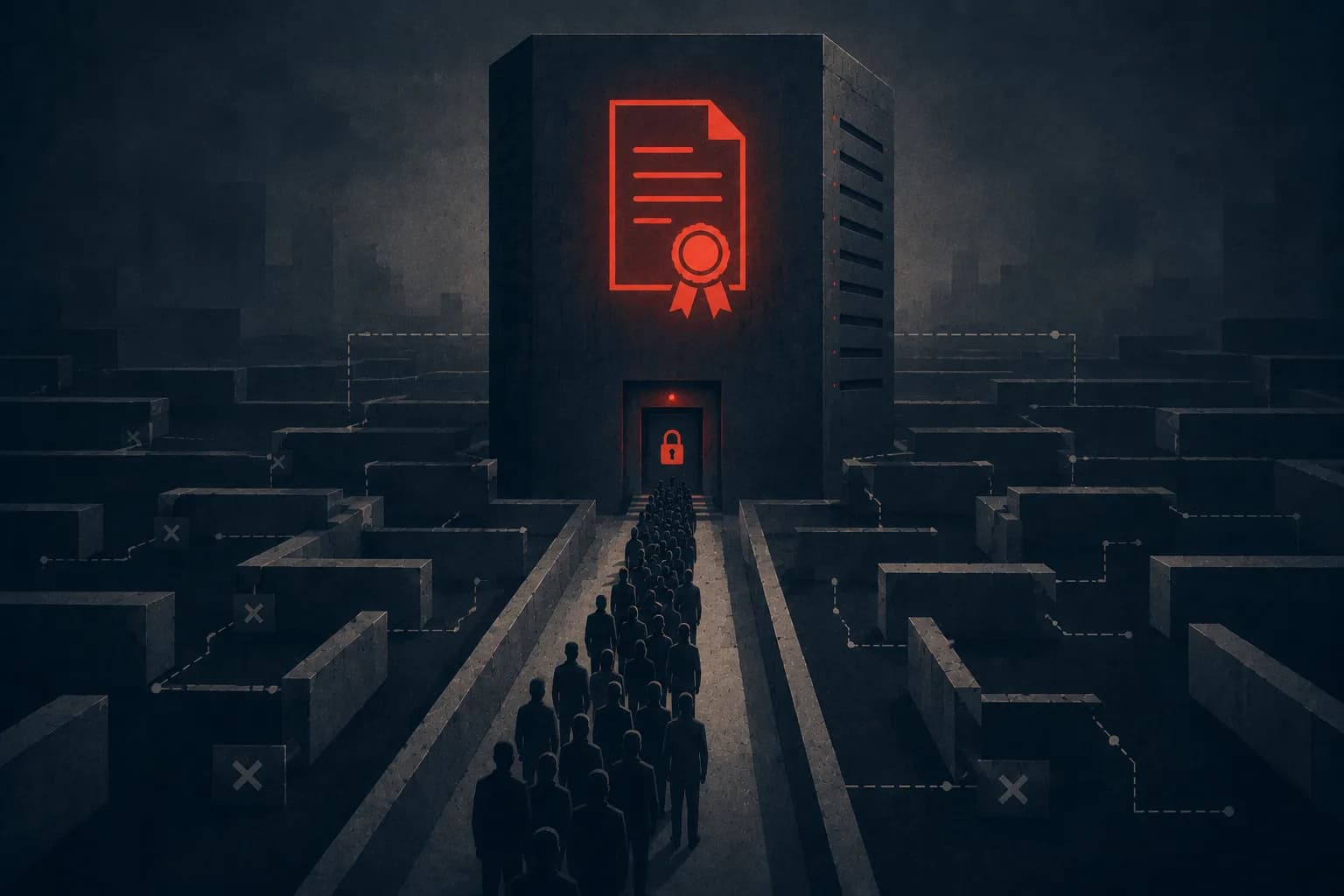
The moment you define it that way, the school's status changes. School is less an educational institution than the monopoly issuer of admissions data. Without that data you can't enter the game.
So platform lock-in is complete. The state of being unable to leave even as service quality drops. Parents and students rage at the system's decline while being held hostage by admissions, unable to exit public education. The authority/responsibility asymmetry from Part 1 (teachers whose importance went up while authority was taken away) sits on top of this lock-in. The more their importance was maximized, the more attractive a target the weak point became.
Populism disguised as equality
There's another layer. This lock-in didn't just happen — it was sold.
"Let's get into university through diverse individuality instead of quantitative tests" was an appealing slogan. For the public it's the fantasy that "you can be at the center of the world even if you're not an elite." But reducing quantitative evaluation (the CSAT) and expanding qualitative evaluation (rolling admissions) produced the opposite result. Admissions degenerated into an opaque process overwhelmingly favoring those with information, capital, and parental networks. It planted the illusion of equality while building a more entrenched machine for reproducing class.
And I don't think that's accidental. What the Democratic Party fundamentally wants is power, and toward that it converts cards like "breaking elitism," "abolishing university rankings," "shrinking the CSAT and strengthening rolling admissions," and "weakening private tutoring" into votes. It can't give this up. Selling the public an illusion of equality is too efficient at securing power.
To be clear, this isn't "because the Democratic Party is evil." In a mass-democratic structure that moves toward votes, whoever holds office finds this card hard to refuse. It's an incentive-structure problem, not a people problem.
Then politics should solve it — it won't
The problem is that the politics that should break this deadlock has structurally lost its drive. Let me be blunt here.
The governing party (Lee Jae-myung / Democratic Party): the teachers' union, progressive education circles, and civic organizations sit firmly inside its core coalition. So it does tweezer-level patching to quiet public discontent (strengthening the teacher protection committee's authority, creating penalties for malicious complaints). It takes populist actions too. But it can never move toward denying or dismantling the giant "student-rights-centered" paradigm itself. That would be political suicide, accepting the defection of its core base. Lee Jae-myung will try to do something, but he can't break the larger frame of "union-style education that looks good."
The main opposition (People Power Party): this backlash — fatigue with PC and progressive education — is material conservatives should absorb into a macro agenda of "normalizing order and discipline" and wield as a weapon. But the PPP right now lacks the capacity to process it into sophisticated policy discourse. It simply rides fragmented resentment, having lost the ability to lead a battle of ideas.
Lee Jun-seok: his instinct for catching public needs like PC fatigue, fairness, and strict punishment and turning them into live issues is unmatched. He's worked this material and he works it well. The problem is that under a two-party structure and an imperial presidency, that discursive ability doesn't convert into legislative or administrative power. The speaker volume is high, but the seats to pass bills and the administrative infrastructure are drastically short.
So the conclusion is close to what policy studies calls incrementalism. Even when the public feels catharsis through media and recognizes the collapse, real politics — because of structural limits — only modifies and sutures the existing system at the margins. It can get a bit better. But that's the ceiling.
Then hand it to an independent body? — the oracle problem
Naturally you get to "so let's take politics out and hand education reform to an independent body of experts." Just as the Bank of Korea's Monetary Policy Board sets rates independently of political pressure, the compromise would legally block politicians from admissions, education, and population policy and delegate them to a technocratic body.
Appealing. But I don't think it works. And the reason was interesting to me.
First, this is an old debate. Plato's warning about ochlocracy while attacking mass democracy, Jason Brennan's epistocracy, what's often called differential democracy, and the case most often summoned as it actually working: Singaporean technocracy. Singapore is stable not because of repression but because its core agendas (housing, education, economy, foreign policy) are decided by a trained minority of elite bureaucrats insulated from electoral pressure. There's no space for public sentiment to shake policy.
But bringing this to Korea is blocked twice over.
First, the bootstrap paradox. To pull a domain out of public interference and hand it to an independent body, you paradoxically have to get that very transfer of authority approved by public vote. There's no case of a public that has already experienced advanced democracy voluntarily agreeing to give up its own political power and its egalitarian fantasy to concentrate power in a few. Barring a forced reset from an external shock like war or sovereign default, this path is closed in peacetime.
Second, a societal version of the oracle problem. In blockchain, when you bring trustworthy external data into the system, "who vouches that it's actually trustworthy" doesn't resolve. Ported to education it becomes: "who decides who the elites are, and who accepts it?" In the past exams (the bar exam, the CSAT) were that index, but polarization means no index is accepted as neutral now. Try to set a new standard and you can't avoid the attack that "the standard itself was drawn to favor the other camp." When both sides distrust each other, no trusted third party exists. The consensus algorithm is broken.
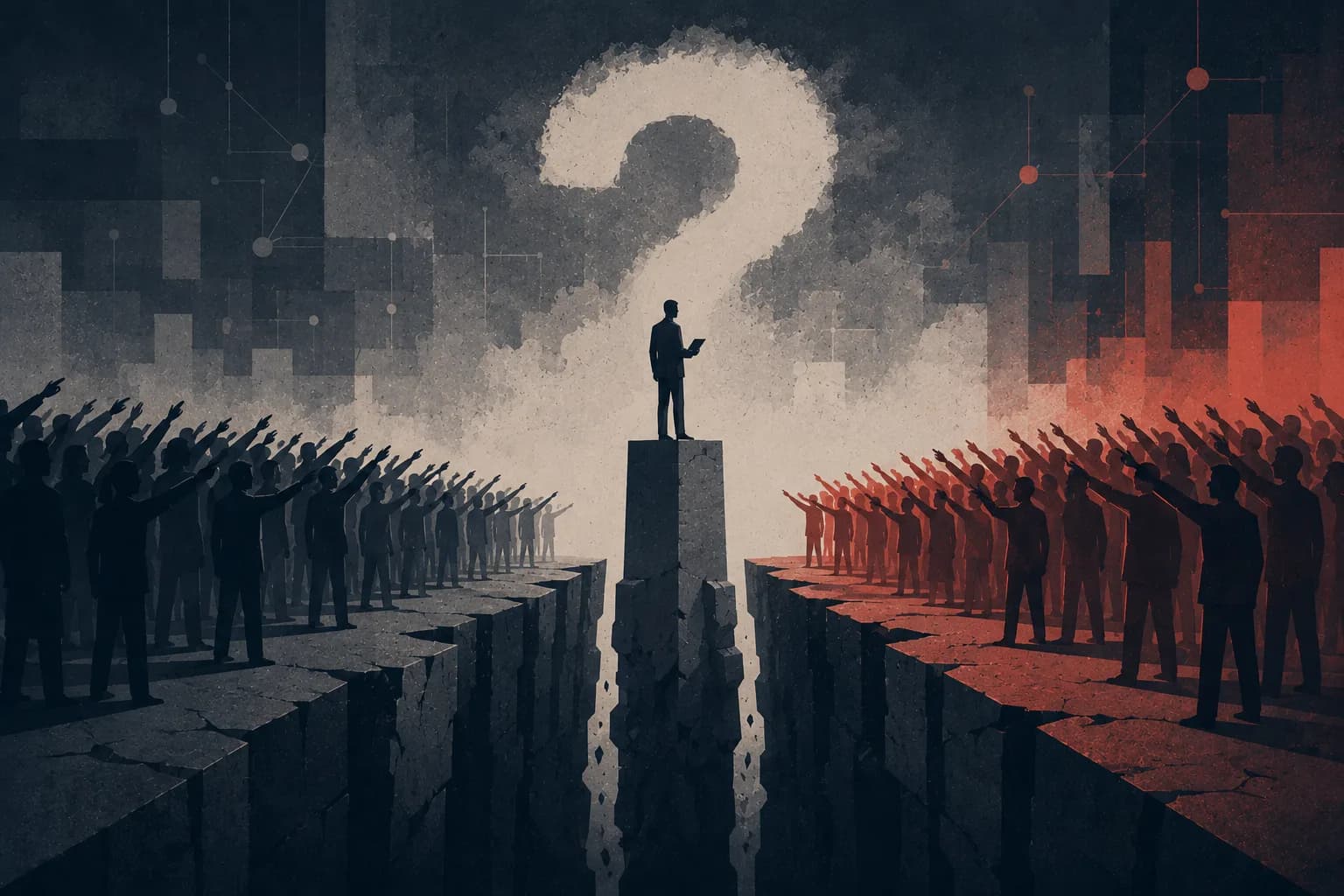
So this isn't "we can't find good people," it's "the consensus layer that grants a validator legitimacy has collapsed." A system problem, not a people problem. Bluntly: I think this path is already closed.
One thread — the conservative turn among 20s–30s as self-correction
Does that mean zero exits? There's one thread. Self-correction, where the public turns its own direction.
The recent conservative/rightward shift among people in their 20s and 30s looks like an example. This isn't a return to old conservatism (anti-communism, authoritarianism) — it reads closer to a reaction against hypocritical egalitarianism and a hunger for strict meritocracy and fairness. The public noticing "the fatigue of fake equality" on its own and demanding a normalization of the rule that "people who work hard and have ability should be justly rewarded." That drive rises from below rather than from above, so it can't be dismissed.
But it has structural limits too. There's no force to elevate the anger into policy. The risk is always there that the resentment doesn't turn into sophisticated system redesign and instead gets consumed as gender conflict or another form of "elite hatred" (contempt for expertise). Self-correction pointed the wrong way is just a different populism.
Conclusion: two branches in the age of soft collapse
Once individuals realize the macro reform path (changing things through voice) is closed, they switch to evolutionary survival strategies. In Hirschman's terms, they abandon voice and go to exit. Society doesn't collapse at once — it enters a slow-emptying phase of soft collapse, and behavior converges on roughly two branches (this part is closer to hypothesis).
1. Exit — the high-capability layer Those with global mobility and irreplaceable skills or capital don't spend energy inside a leveled-down system. Talent with high-end expertise like semiconductor or blockchain architecture design has no reason to waste capacity tied up in populist regulation and an inefficient tax environment. They move their corporate entity and daily life to hubs like Singapore where meritocracy and bureaucratic rationality still function. Without regret. That's less an escape than optimizing your own trajectory.
2. Adaptation — the majority without the resources to exit Those who can't leave give up on normalizing the system and move toward free-riding. They drop the exhausting struggle to fix it (voice) and shrewdly collect the short-term benefits populism throws out periodically (subsidies, shorter working hours, reduced liability). "If the structure is going to collapse anyway, no need for me to carry it" becomes standard rational cynicism. The model is: the national pie can shrink as long as my slice of comfort holds.
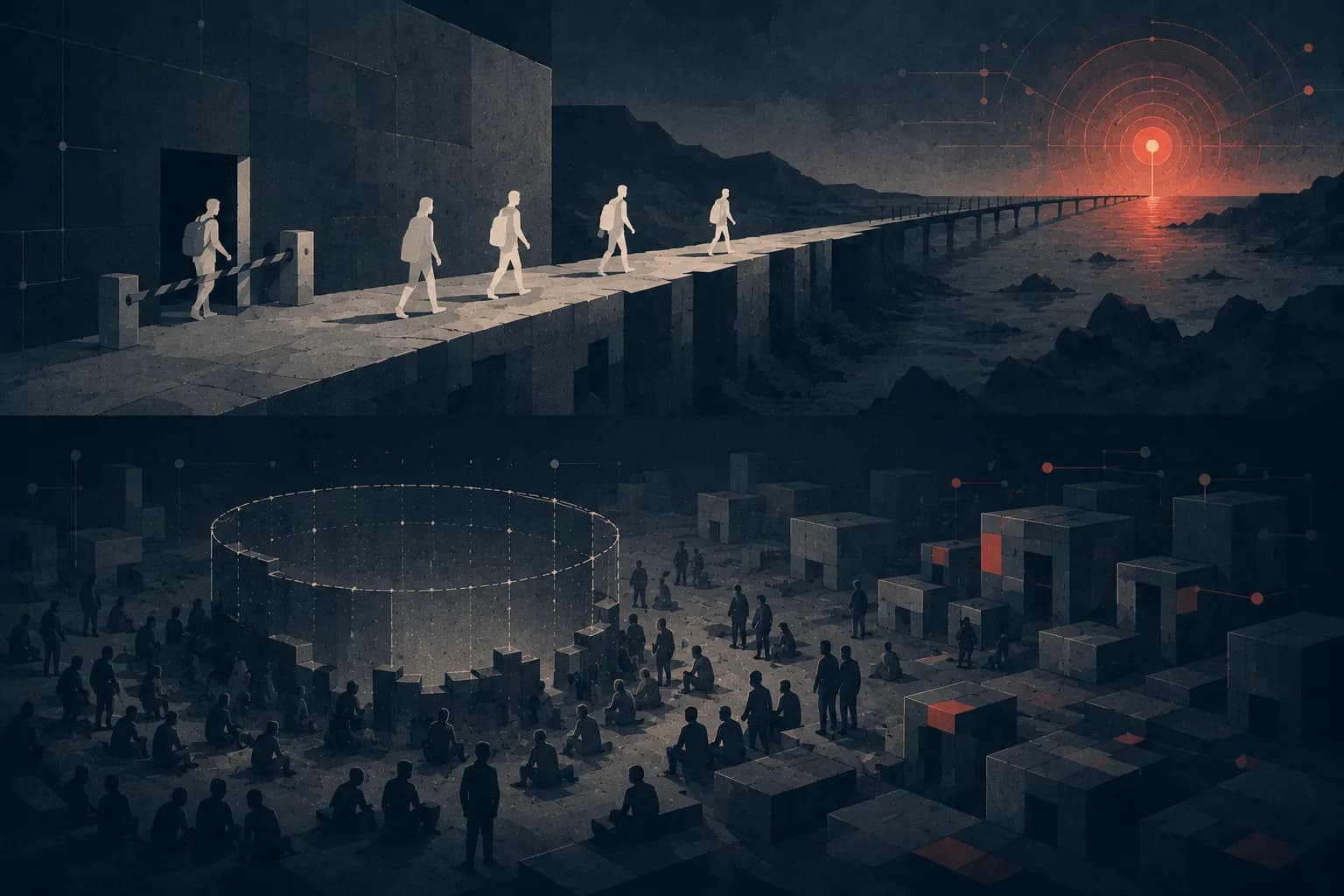
To sum up: the people who would create value slip across the border, and those who stay ride along while billing the system for costs. Accelerate both strategies and the drive to innovate dies, maintenance costs swell, and the national platform's capacity quietly hollows out.
This is a scenario, no more. But if no path to unlocking the lock-in is visible, this is roughly the equilibrium individuals rationally arrive at — the picture draws itself.
What looks like an exit isn't one
You might counter: "if the value of a degree falls, doesn't the lock-in break too?" If the degree signal weakens, the school's monopoly on issuing it should weaken along with it.
But I think reality went the opposite way. Policies that lower the value of a degree (flattening rankings, shrinking quantitative evaluation) didn't unlock anything — they pushed people further into infinite competition and credential hell. Blur one signal (the CSAT score) and school records, non-curricular activities, assorted specs, and certifications fill the space without limit. When the evaluation axis was clear you only had to clear that one thing; blur it and it becomes a game where you need all of it. It didn't widen the exit, it expanded the arena to infinity.
So I think the intuition "degree devaluation = weaker lock-in" is wrong. It made the forced purchase tighter. No real exit is visible.
If Part 1 was "why do people cheer for barbarism," Part 2 was "why doesn't the structure that summoned that barbarism get fixed." Both land in the same place. Structure, not attitude. But seeing the structure doesn't mean seeing the exit, so this thought is still in progress.
That's it for now.